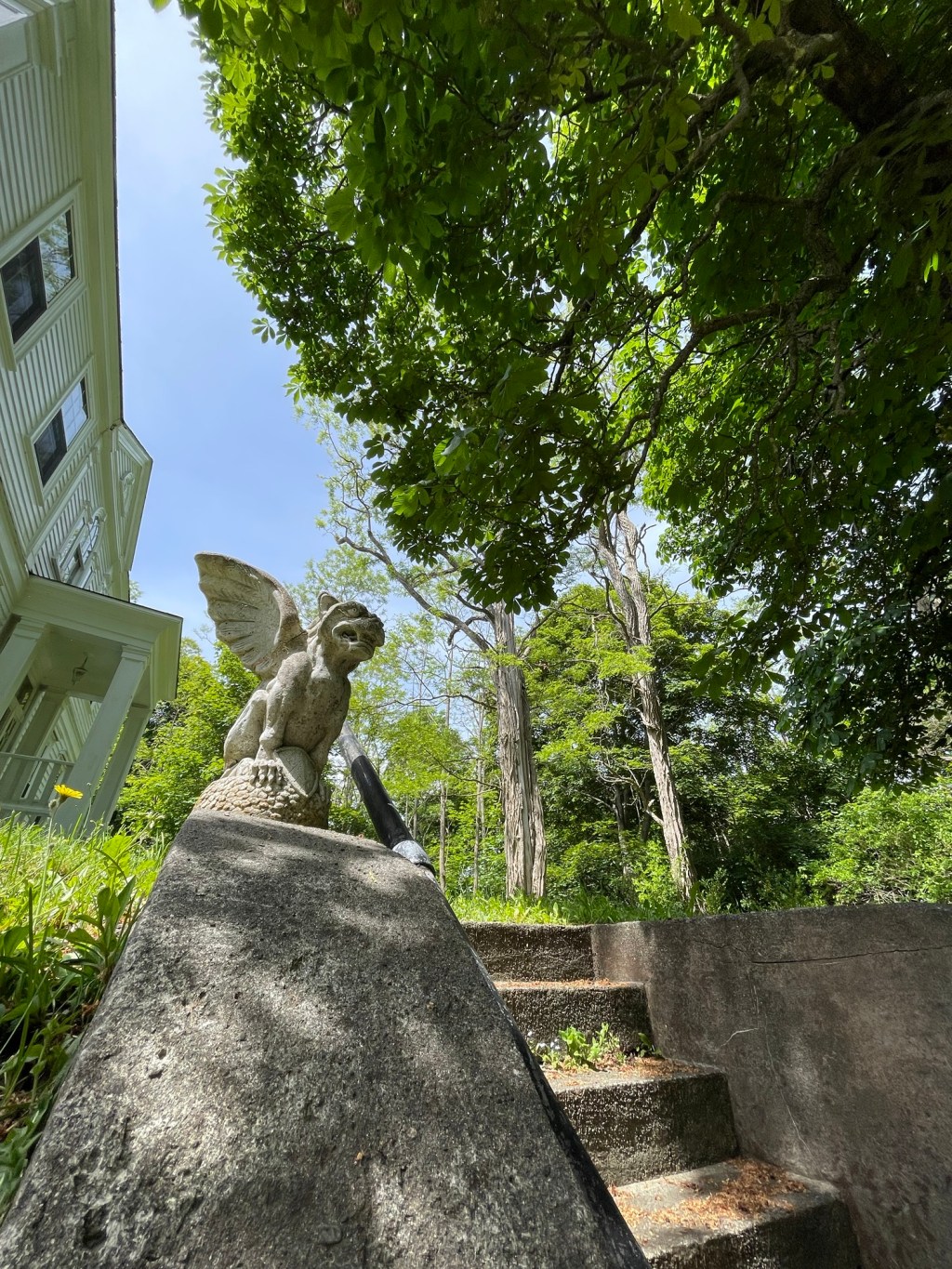
Buying this house and committing to loving and caring for something that has been around as long as it has (200 years!), is a big deal. There is excitement, anticipation, of course, but there is also a heavy cloud of responsibility. Afterall, generations of people before you managed to nurture and protect not just the structures but the gardens and trees as well. Talk about a don’t-eff-it-up kind of pressure!
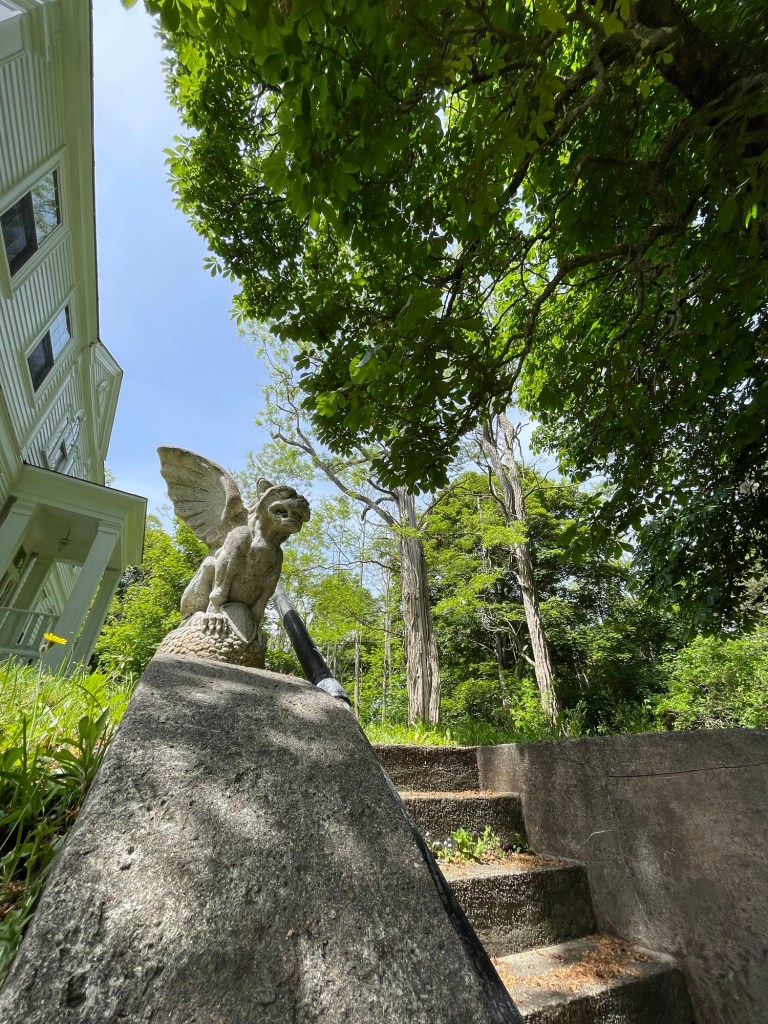
That sense of responsibility has made keeping our sense of humour, and taking time to appreciate the little moments, essential. One such moment happened when we were discussing a very large, beautiful, tree that lives just to the front of the house. It is an impressive arbour that overhangs the driveway and we actually had to cut a branch off of it to make room for the truck that brought our seacan in and out of the property.
While chatting about the tree, Keith—newly interest in horticulture, was trying to recall its proper name. Now, one thing to know is that I love the sound of his voice and the way he speaks and emphasizes words. So much that while he thinks I’m teasing him, I’m actually falling in love with him even more. That man could talk to me about bolts and engines and I would get all doe-eyed.
We all have a unique way of speaking that is part biological and part environmental. My grandfather called a sandwich a sangwidge, my mother-in-law says Ipewbufferin instead of Ibuprofen, and we all know people who get their books from a liberry. Well, when Keith was recalling the name for the Horse Chestnut, it sounded a whole lot like whore’s chestnut. And both of us had a wonderful moment of laughter while admiring this amazing tree. Now, whenever I talk about the Horse Chestnut y’all will be knowing what is really going on in my mind!
What is a Horse Chestnut tree anyhow?
Since this is the first time I have ever dealt with a Horse Chestnut tree, I had to do some research to find out more about what it is, how it likes to be cared for, and what my responsibilities would be going forward. The proper name for it is Aesculus hippocastanum and it belongs to the family of Spindaceae. The tree can grow from 50 to 150 feet (15 to 45 meters) when provided with full sun and rich, cool soil. Better yet, the Horse Chestnut doesn’t require any pruning!
Unfortunately, the conkers (spiky fruits) are not edible in their whole form but they do have recognized medicinal benefits as an anti-inflammatory, decongestant, and antihemorrhagic. Turns out that extracts and infusions of the seeds, bark, and even leaves can have benefits on circulation, night time cramps, varicose veins (I like to call them very-close veins), rosacea and more. The fruits have also been used to treat epilepsy and migraines which are both conditions that affect me. Wow!
I’m looking forward to diving into the medicinal benefits in the future. I see a lot of potential applications for me and my family and in the home care products that I make. But for right now, there’s too much to do elsewhere. If anyone has experience with the Horse Chestnut or using it for medicinal purposes, I’d love to hear about it!

 Now & When
Leave a comment