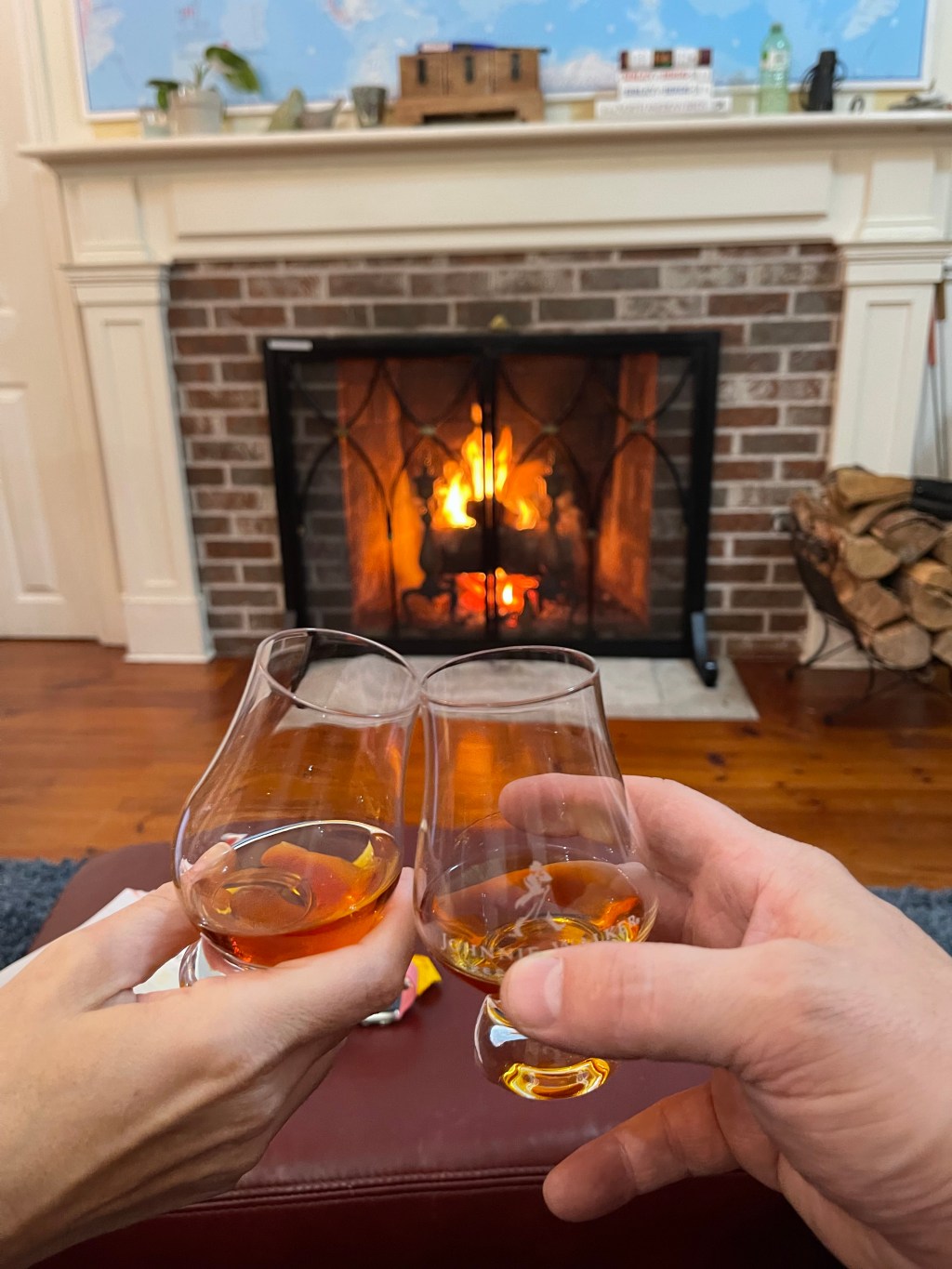
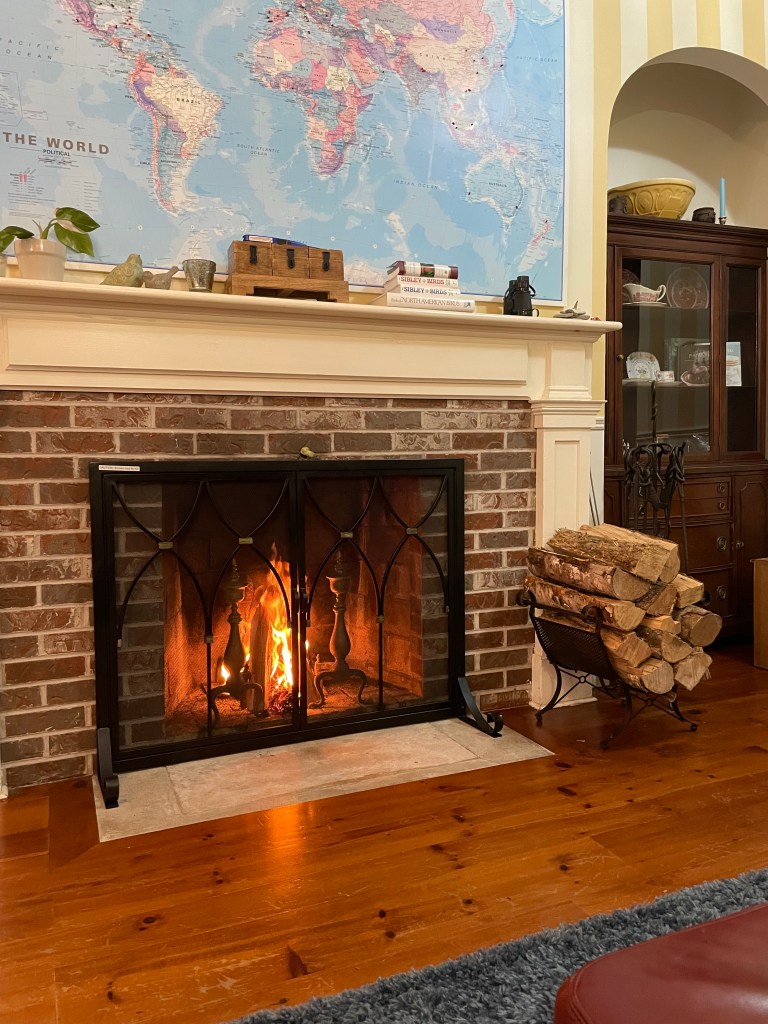
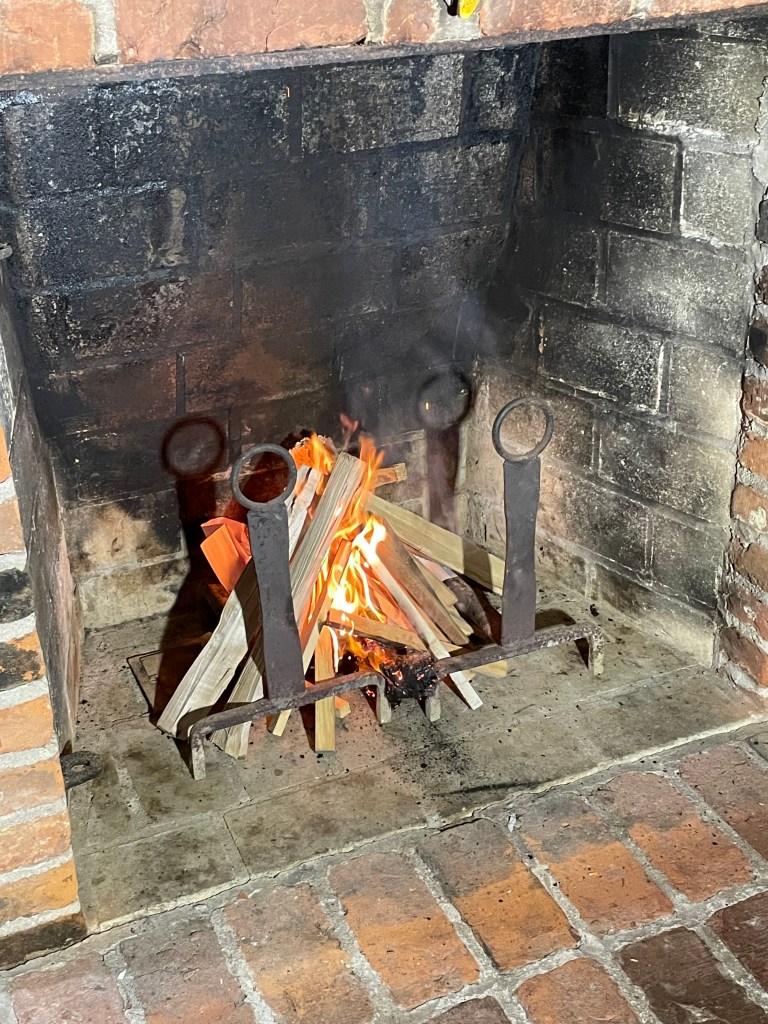
Fire, particularly controlled fire, has played a significant role in human history (obviously). It allowed us to keep warm, cook, and clear land to cultivate food. I have been reminded of that importance recently as Denaige, the dogs and I have been fortunate to enjoy its warmth and the novelty of roasting wieners and marshmallows indoors. Of course, all the memories, photos, and videos of us pleasantly enjoying a soul warming fire obscures the amount of work required to start and maintain the fire as well as the fireplace!
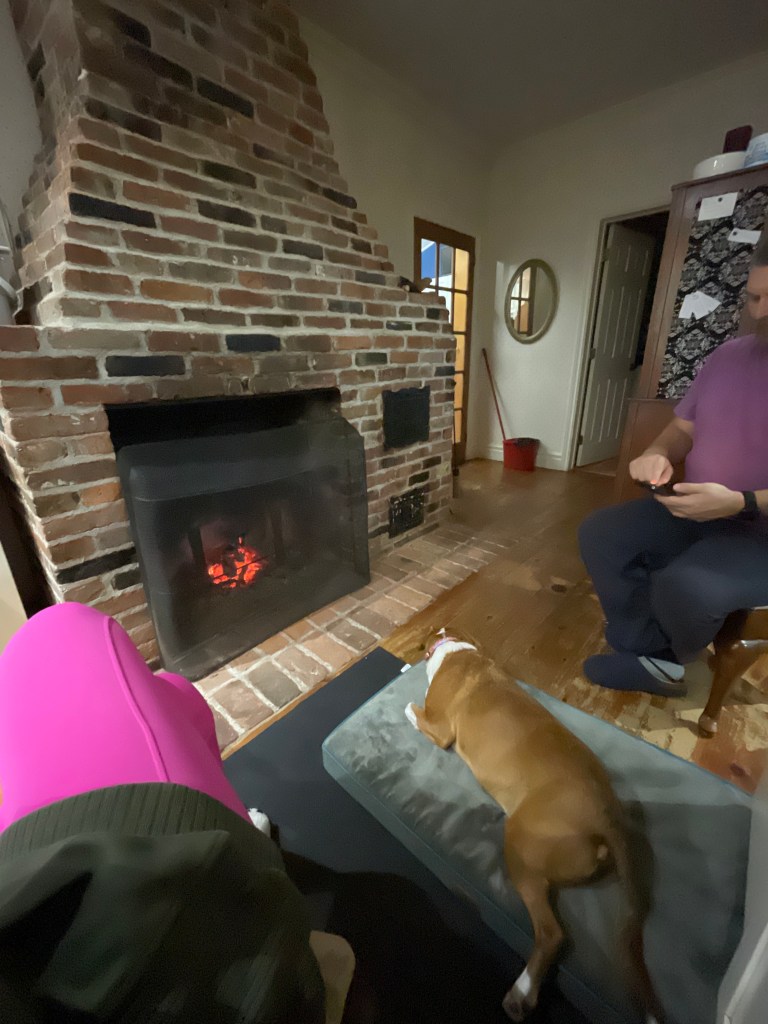
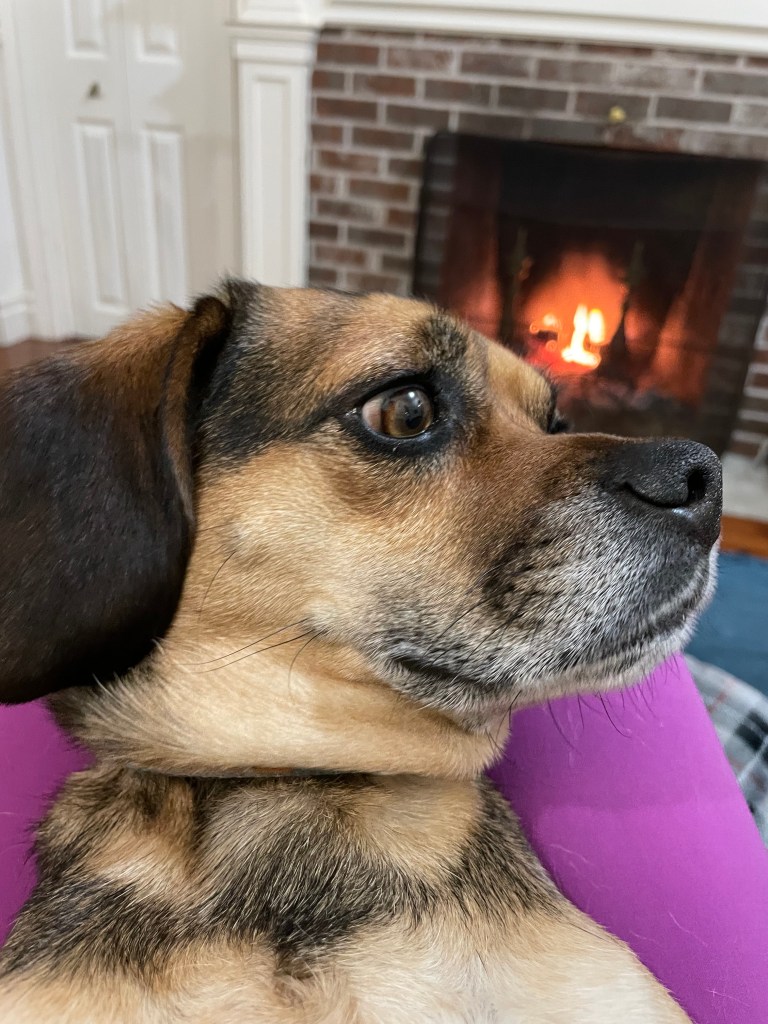
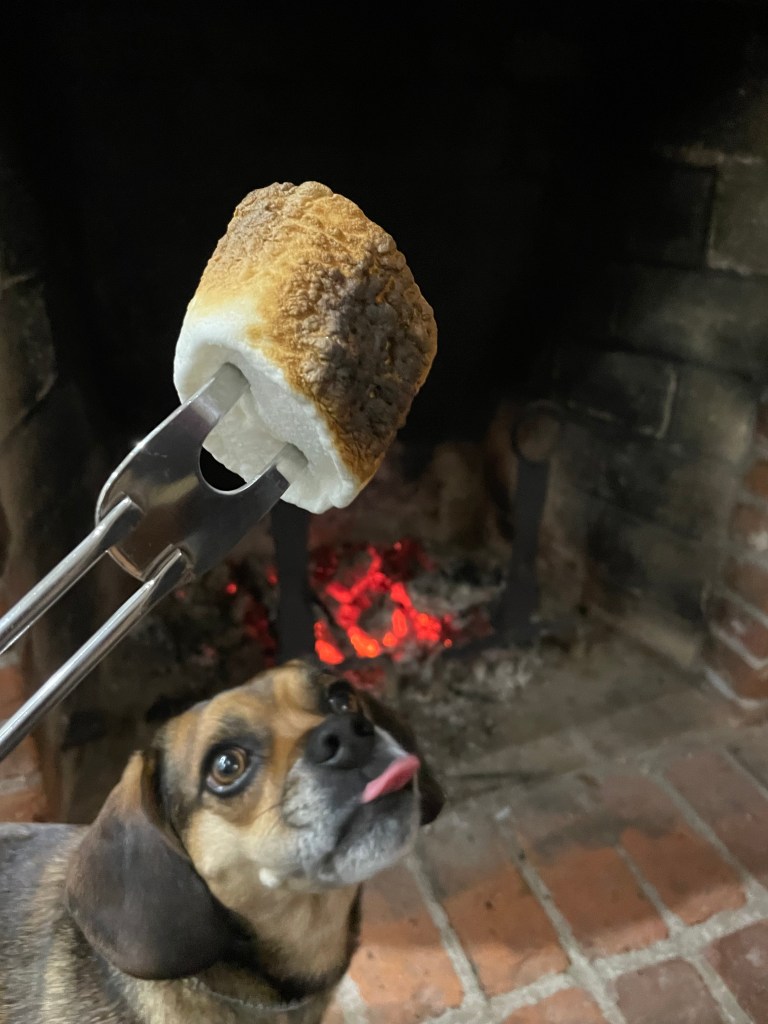
↑ Persephone thought she might get a taste of that delicious marshmallow!
The previous owners left several cords of chopped firewood so, it appeared we had all we needed to have a fire (Fireplace… check! Firewood… check!). However, fires need kindling to start, so we purchased a “kindling cracker”. And so far I think it’s an effective tool vs. making kindling with an axe or hatchet (It’s still very sharp, though!). Fires are also hungry, so we need to bring in the firewood and create a convenient place to store it near the fireplace to avoid the constant trip to the woodpile and back. This seemed like a simple enough task. I placed 2 large totes in our mudroom, 1 for kindling, and 1 for larger wood.
With dry kindling and firewood indoors, we were ready for nights of nostalgic and convenient heat. And then reality further set it. We needed to open the flue on the fireplace, which was easy enough with a wormgear operated flue, but it was a bit sticky, requiring some extra effort and diligence to ensure the flue was fully open. Then came the fun part. Let’s light the fire!
Well, I must admit my boy scout skills were a little lacking to ensure the fire gets hot and stays hot enough to burn the larger logs. I tried both a tipi/tent style setup and a cabin style setup and prefer the cabin style as you can just keep stacking logs once it starts burning vs. a tent style that will fall over if you try to put a log on it.
Once I got back into the groove of starting and maintaining a fire I started to learn about the important nuances of keeping a fire. Ensuring your firewood is dry, dry, dry is essential to maintaining your chimney (wet wood creates more smoke and creosote buildup, which eventually can be a fire hazard). Also the type of wood you use is important, too. Hardwood burns longer than softwood and (according to my readings) produces less deposits (like creosote) in your fireplace. The size of the log is important too. Small pieces are great when you start the fire as they burn fast, but once the fire is going finding those perfect size logs to maintain the heat becomes more of a focus.
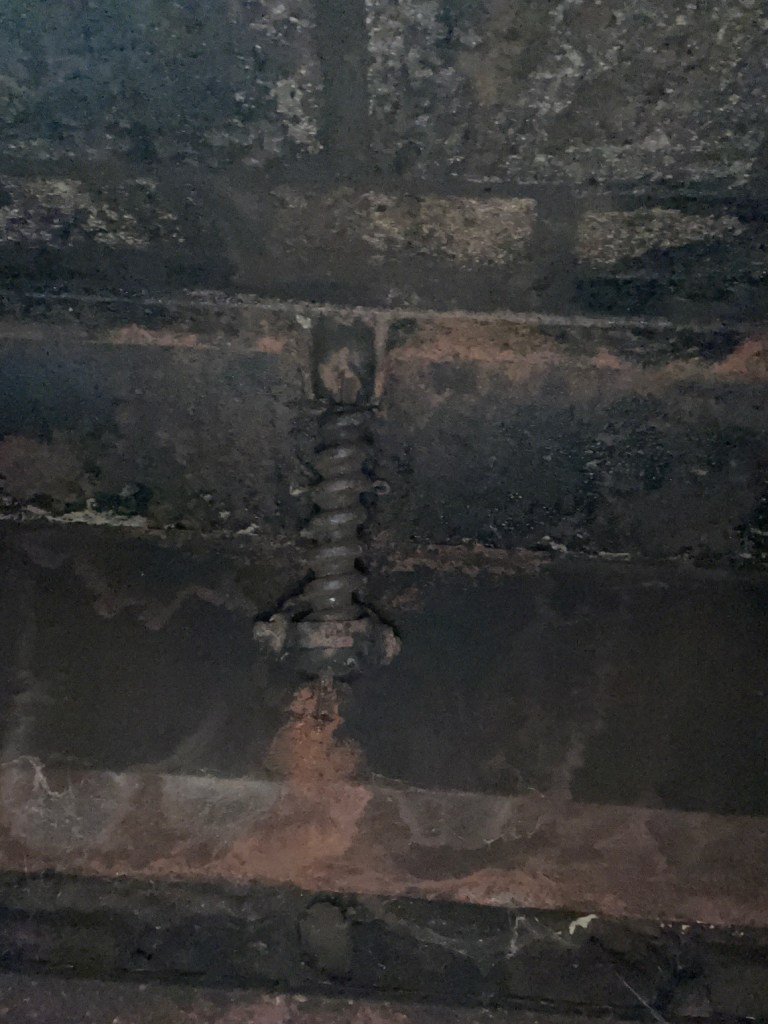
↑ this is the wormgear that operates the flue
So now, that easy, convenient fire has exposed that it’s not so easy. Hauling, prepping, and feeding wood for the fire takes time, and space. And ensuring your fireplace is maintained also takes consideration, time, and effort. We’ll need to clean the chimney in the spring and probably do some maintenance on the flue operator. And, lets not forget the effort required to cut trees and chop the firewood into cords either.
Don’t take this as complaining, though. I enjoy the occasional evening fires. It’s also given me a discussion point with my Dad, who grew up in a household that had no electricity or running water for much of his childhood. For him tending the fire was a well honed skill and a chore vs. a luxurious art. Simply put, if the fire was not tended to the family suffered. So, the art of the fire has reminded me of the not-so-distant past where a good portion of resource was put toward keeping the fire going.

 Now & When
Leave a comment